
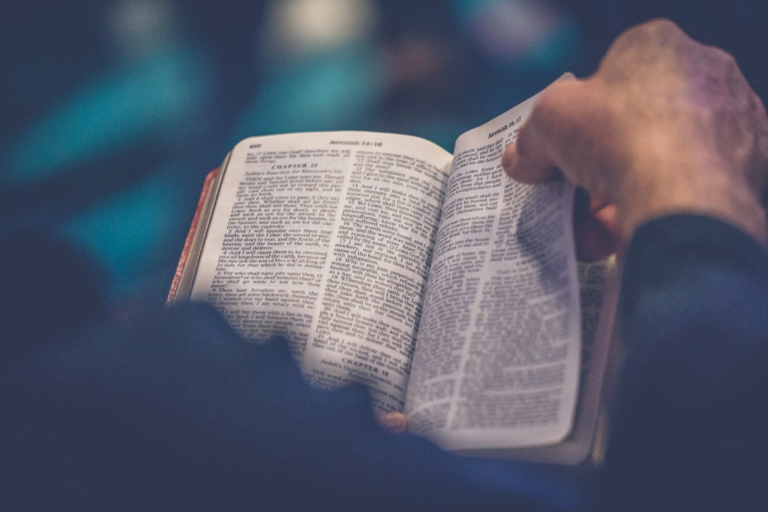
The Bible is a large and complex book, and approaching it can be genuinely overwhelming – particularly if you are relatively new to reading it, or if you have tried before and found the process confusing or discouraging. The scale of it, the variety of genres it contains, and the expectations people bring to it can all combine to make Scripture feel more like a mountain than an invitation.
Releasing the pressure of comprehensiveness
One of the most helpful shifts in approaching the Bible without overwhelm is releasing the expectation that you need to understand all of it, read all of it in a particular order, or master its contents before you are really engaging properly. These expectations are common, but they are not required.
The Bible can be entered at almost any point. Some books are more immediately accessible than others. The Gospels, for many people, are the most natural starting place – they are narratively engaging, historically grounded, and centred on the person of Jesus. The Psalms offer another accessible entry point, because they deal so directly with the full range of human emotion.
Choosing a starting point that fits you
Rather than beginning at Genesis and attempting to read straight through, consider what you actually need from Scripture in this season. If you need comfort, the Psalms or parts of Isaiah may serve you well. If you want to understand the life and teaching of Jesus, start with one of the Gospels. If you are interested in early church life, Acts is a good beginning.
Letting your actual need or curiosity guide your starting point is not a compromise. It is a realistic way of engaging with a complex text that is meant to be lived with over a lifetime, not consumed in a single reading.
Quantity is not the primary goal
Another source of overwhelm in Bible reading is the sense that more is always better – more chapters, more depth, more knowledge. But the formative power of Scripture comes less from quantity of exposure and more from quality of attention. Reading two verses slowly and allowing them to settle is often more nourishing than reading ten chapters quickly.
If the amount you are currently reading feels small, that is fine. The goal is faithful return, not comprehensive coverage. You can expand the scope over time. The important thing is that you keep coming back.
A gentle reframe
The Bible is not an examination you must pass. It is a long conversation you are invited to enter and remain in. Some parts of that conversation will be immediately meaningful, others will take time, and others may remain unclear for years. All of that is acceptable.
You are not meant to arrive at the Bible already understanding it. You are meant to come to it honestly, stay with it faithfully, and trust that over time, it will do what it has always done in the lives of those who take it seriously – form you, slowly and deeply, into someone more fully alive.