
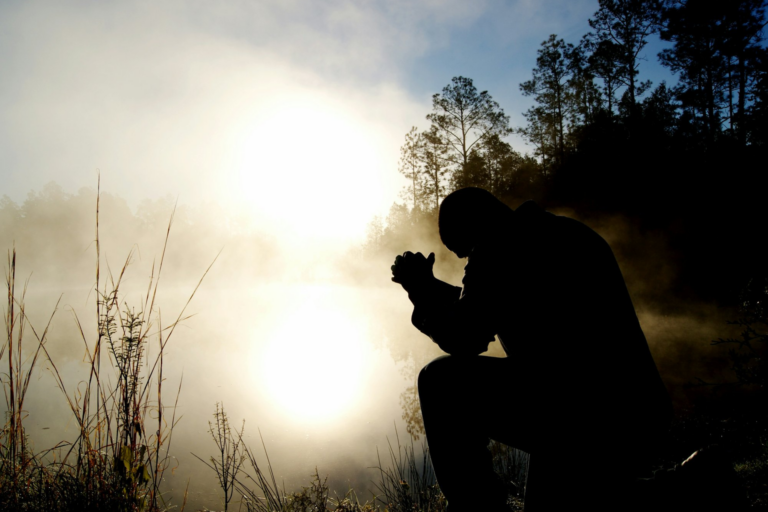
Anxiety does not announce itself respectfully. It arrives when you would least choose it – in the middle of the night, before something important, in quiet moments that should feel peaceful. And for those who also hold faith, there is often a secondary layer of difficulty: the sense that anxiety is somehow a failure of trust, a sign that faith is not working.
Faith and anxiety are not opposites
This is one of the most important things to say clearly: experiencing anxiety does not mean your faith is insufficient. Anxiety is not primarily a spiritual problem. It is, for many people, a physiological and psychological reality with deep roots in temperament, experience, and brain chemistry. It is something that happens in a body, not just a symptom of inadequate belief.
Scripture acknowledges anxiety honestly. Do not be anxious is an invitation into trust, not a condemnation for those who struggle with fear. Even those of deep faith – Paul, who wrote those words, experienced fear and weakness. The invitation is toward something, not a punishment for what you currently feel.
Bringing anxiety to prayer
One of the most genuinely helpful things you can do with anxiety is bring it honestly into prayer. Not to ask God to remove it immediately, though that is a legitimate prayer. But to bring the actual experience – the racing thoughts, the tight chest, the specific fears – and name them before God rather than carrying them alone.
This practice does not always resolve the anxiety. But it does something else: it keeps you in relationship with God in the middle of it, rather than withdrawing because you feel you should not be struggling.
Doubt alongside faith
Doubt is similarly common among people of genuine faith. The capacity to believe and to doubt simultaneously is not a sign of spiritual failure. It is a sign of an honest, thinking faith that has not simply switched off its capacity for questions.
Some of the most celebrated figures in Christian history wrestled publicly with doubt. The disciples doubted even after the resurrection. Thomas became a compelling figure precisely because his doubt was honest rather than hidden. Doubt, when it is brought to God rather than used to walk away from Him, can deepen faith rather than diminish it.
What faith in the middle of fear looks like
Faith in the middle of anxiety and fear is not the absence of those experiences. It is the choice to keep trusting, keep praying, keep moving in the right direction even while they are present. It is holding both things at once – the fear and the trust – without demanding that the fear resolve first.
If you are living with anxiety, you are not less faithful for it. You are navigating something genuinely difficult, and the grace available to you in it is real. You do not need to be without fear in order to be held by God.